
The New Wave of Out of State Buyers
For years, Nevada has been a magnet for relocation, but the past several cycles have transformed that steady migration into something far more powerful. The flow of buyers coming from California has shifted from a predictable stream into a force that reshapes pricing, demand, inventory patterns, and even the types of homes builders choose to design. While inbound migration from the Golden State is not new, the motivations, demographics, and expectations of today’s buyers are markedly different than those of a decade ago. As a result, Nevada agents and brokers are operating in a climate that requires more profound local expertise, sharper pricing strategy, and the ability to anticipate the ripple effects of population movement.
California buyers continue to drive a significant share of home purchases in Nevada, especially in Clark and Washoe counties. Yet what used to be a fairly straightforward story of people chasing affordability has become far more layered. Today’s migrants are not just fleeing high prices. They are looking for lifestyle shifts, tax advantages, job flexibility, and in many cases, a chance to regain control of their financial future. For Nevada real estate professionals, understanding this new wave of buyers is essential to capturing listings, guiding purchasers, and positioning themselves as trusted market experts.
A New Type of California Buyer

In the early 2010s, California buyers often came with a familiar profile. Many were retirees downsizing from expensive coastal cities. Others were working families priced out of major metros such as Los Angeles, San Francisco, and San Diego. These groups have not disappeared, but they are no longer the dominant force.
Over the past five years, the story has shifted. Nevada is now welcoming a diverse group of Californians with different motivations and expectations. Young professionals who can work remotely are leaving dense cities for more elbow room and a lower cost of living. Mid-career earners with high incomes but limited buying power at home are starting to discover that Nevada’s suburban markets offer the space and lifestyle they want without sacrificing proximity to the West Coast. Investors who once focused on traditional rental markets are recognizing that Nevada’s tax structure offers a more advantageous environment for long-term portfolio growth.
These shifts have widened the range of property types in demand. The luxury segment has expanded as high-income earners from the Bay Area and Orange County pursue gated communities, golf-course homes, and new construction in master-planned developments. At the same time, demand for entry-level housing remains strong as working families look to escape California’s high housing costs. This blend of demographics is one of the reasons Nevada’s market continues to move at two speeds at once, with some segments cooling while others remain competitive.
Affordability Has Changed, but the Advantage Remains
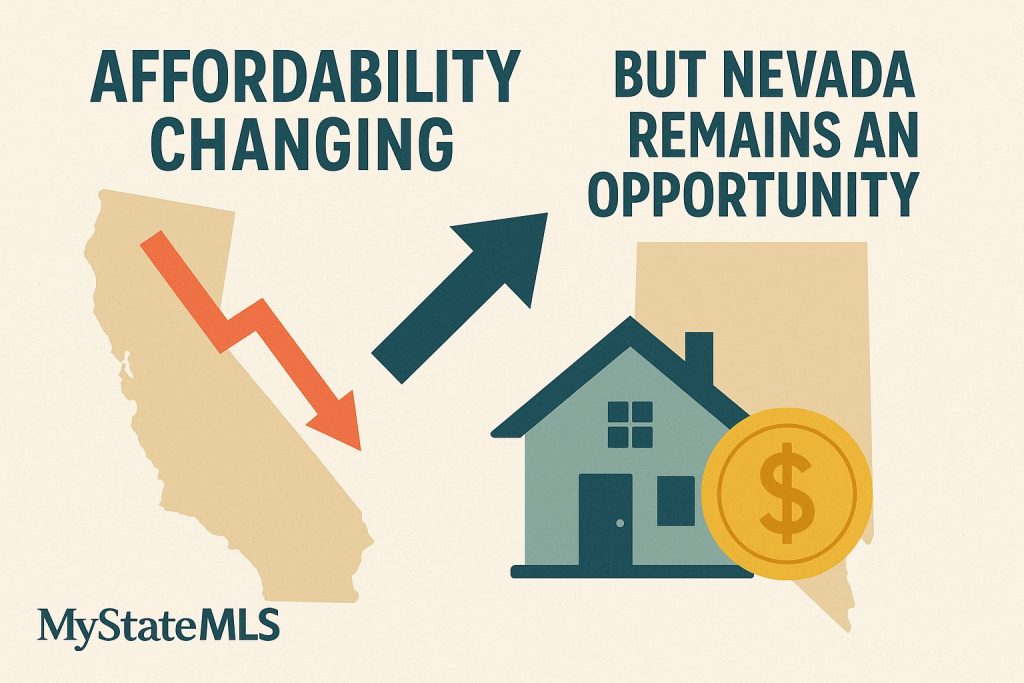
California migration once rested almost entirely on affordability, but after the price boom of 2020 through 2022, Nevada’s relative value became less dramatic. Prices in Las Vegas, Reno, and Henderson climbed quickly, reducing the gap between similar homes in Southern California and those in Clark County. Even with those increases, the advantage remains strong, particularly when buyers factor in property taxes, income taxes, and the ongoing cost of living.
For example, a California homeowner selling a modest single-family home may walk away with substantial equity that translates into significantly more purchasing power in Nevada. Many buyers arrive with the ability to pay cash or put down larger-than-average down payments. This creates competition for Nevada residents but provides strong stability for sellers. It also shapes appraisal dynamics since cash and low loan-to-value transactions exert steady upward pressure on values.
Even buyers who are not relocating for financial reasons find that Nevada offers a more manageable path to homeownership. Insurance costs are often lower, utilities tend to be more predictable, and new construction options are more plentiful than in many parts of California, where entitlement delays and environmental restrictions slow development.
Lifestyle and Flexibility Drive New Demand Patterns
Another defining characteristic of the new migration wave is a shift toward lifestyle-driven decision-making. Buyers who once tolerated long commutes, limited space, and crowded urban environments now seek a sense of balance and breathing room. Nevada’s suburban environments, such as Summerlin, Henderson, Spanish Springs, and Damonte Ranch, offer master-planned living with parks, trails, and recreational amenities that appeal to families and professionals alike.
Remote work continues to reshape expectations. When proximity to a California office is no longer a daily necessity, buyers can prioritize quality of life over geography. Many choose Nevada because it offers a blend of modern amenities, outdoor access, and a pace of life that feels less restrictive than major California metros.
These preferences influence not only where buyers purchase but what they purchase. Homes with additional office space, larger lots, upgraded backyards, and flexible floor plans draw strong interest from remote workers and hybrid professionals. Agents who can effectively market these features gain an edge in attracting relocation clients.
How California Buyers Shape Inventory and Competition
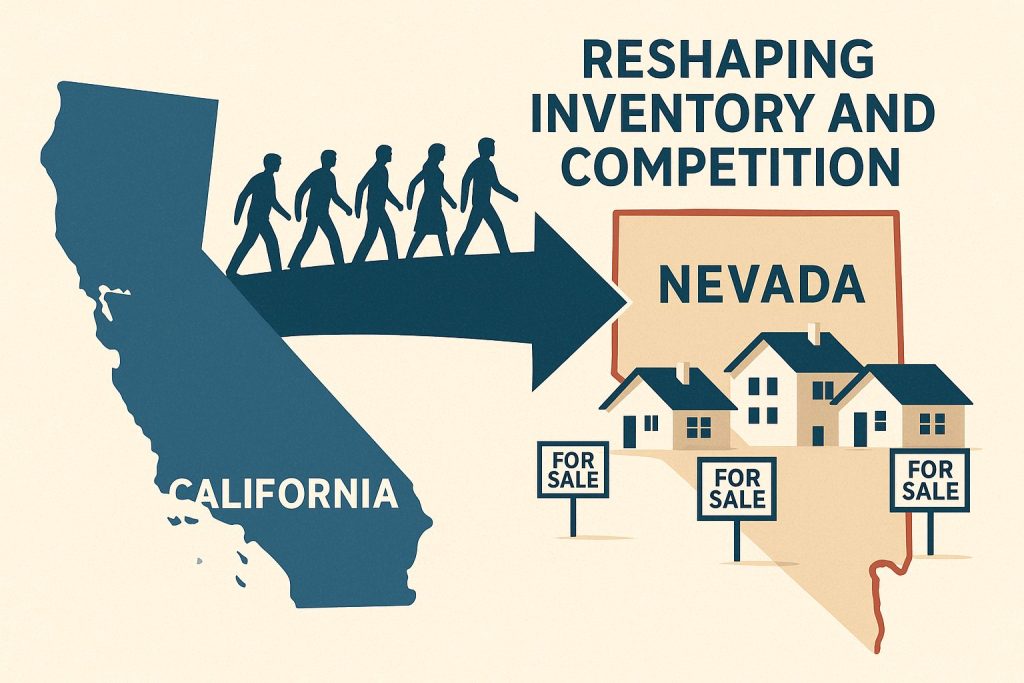
The most noticeable impact of California migration is the tight inventory pressure it creates. Many inbound buyers arrive with cash or strong conventional financing, making them competitive in multiple offer environments. This dynamic can complicate things for Nevada-based first-time buyers who may struggle to match the financial strength of out-of-state purchasers.
Sellers, on the other hand, often welcome the steady demand. Even as the broader market adjusts to interest rate fluctuations, California buyers provide a reliable pipeline of qualified purchasers. This supports home values and reduces volatility, particularly in highly desirable neighborhoods.
In the listing arena, relocation patterns influence how homes should be marketed. Out-of-state buyers often search earlier, ask more preliminary questions, and rely more heavily on virtual tours, neighborhood guides, and data-rich listing presentations. Agents who integrate these tools can capture interest earlier and build trust with prospective clients before they physically arrive in the state.
What Nevada Agents Should Expect Moving Forward
The movement from California into Nevada shows no sign of slowing. Whether driven by taxes, lifestyle, economics, or remote work, the motivations behind this migration trend continue to expand rather than contract. This presents opportunities for agents who understand relocation dynamics, especially those who can communicate the nuances of Nevada’s market to buyers who are unfamiliar with the region.
Agents should expect continued strength in mid-range and upper-tier inventory, steady demand for master planned communities, and ongoing competition in suburban markets. Rural and exurban areas may also see increased interest as buyers seek land, space, and affordability.
The key for Nevada real estate professionals is to stay ahead of migration trends and position themselves as educators, interpreters, and local experts. When agents can help buyers make sense of Nevada’s pricing, communities, schools, taxes, and lifestyle benefits, they become trusted partners in the relocation process.
California migration is no longer just a trend. It is a structural force shaping the future of Nevada real estate. Agents who understand that shift will be best positioned to thrive in the years ahead.